







Introduction
Choosing between seamless and welded steel pipe is not only a price decision. For overseas projects, the safer question is: which pipe route can meet the pressure, temperature, diameter, inspection, documentation, and delivery requirements of the job?
Seamless pipe and welded pipe can both be reliable when the correct standard and inspection plan are used. Problems usually happen when the RFQ only says “steel pipe” without defining manufacturing route, wall thickness, weld inspection, hydrostatic test, MTC requirement, and export packing.
Seamless vs Welded Pipe: Buyer Comparison
Use the table below as a sourcing checklist before requesting a quotation.
| Buyer checkpoint | Seamless steel pipe | Welded steel pipe | What to write in the RFQ |
|---|---|---|---|
| Manufacturing route | Made from billet through piercing, rolling, sizing, and finishing | Made from coil or plate by forming and welding, such as ERW, LSAW, SSAW, or EFW | State seamless or welded type clearly |
| Typical buyer use | High-pressure, high-temperature, thick-wall, boiler, refinery, and critical pipe-body service | Large OD line pipe, structural pipe, water transmission, piling, and cost-sensitive pressure service | Match route to service condition |
| Main inspection focus | Wall thickness uniformity, eccentricity, pipe-body defects, heat treatment, NDT | Weld seam quality, seam NDT, forming quality, straightness, hydrostatic test | Add inspection and test plan points |
| Standards often discussed | ASTM A106, ASTM A335, API 5L, EN 10216 | ASTM A53, API 5L, ASTM A671/A672, EN 10217 | Confirm exact standard, grade, PSL, and edition |
| Documentation | EN 10204 3.1 MTC, heat number, chemical and mechanical data, hydrotest | Same, plus weld process and weld seam inspection records where required | Require MTC and NDT reports before shipment |
When Seamless Pipe Makes More Sense
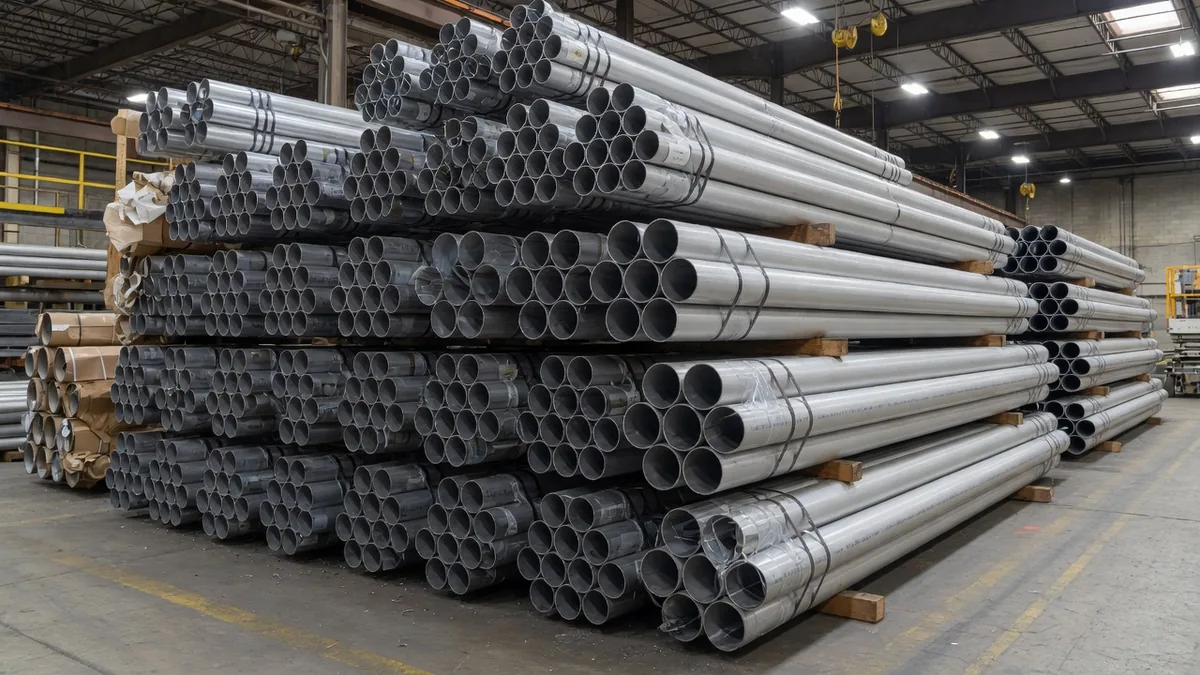
Seamless pipe is often preferred when the buyer wants a pipe body without a longitudinal weld seam. This can be useful for high-pressure, high-temperature, thick-wall, boiler, refinery, power plant, and critical process piping applications.
That does not mean seamless pipe needs less inspection. Buyers should check wall thickness at multiple points, because OD can look acceptable while the minimum wall thickness or eccentricity still creates a risk. The MTC should also show the grade, heat number, chemical analysis, mechanical results, heat treatment condition when applicable, and hydrostatic or permitted alternative test record.
When Welded Pipe Is The Practical Choice
Welded steel pipe is often practical for large outside diameter, line pipe, structural pipe, water transmission, piling, and projects where production efficiency and size availability matter. Common welded routes include ERW, LSAW, SSAW, and EFW.
The key buyer issue is not that welded pipe has a seam. The issue is whether the weld seam is controlled, inspected, and documented for the project requirement. For welded pipe, the RFQ should state the weld type, required NDT method, hydrostatic test, end preparation, coating, and marking requirements.
Inspection Checklist Before Shipment
Before releasing payment balance or approving shipment, ask the supplier to confirm:
- Standard, grade, manufacturing route, OD, wall thickness, schedule, length, end type, and quantity.
- EN 10204 3.1 MTC with heat number traceability and actual chemical and mechanical test results.
- Hydrostatic test record or the alternative test permitted by the applicable standard and purchase specification.
- Dimensional report covering OD, wall thickness, length, straightness, ovality, bevel, and end condition.
- Visual inspection results for dents, cracks, laminations, pits, coating damage, and pipe-end damage.
- For seamless pipe, wall-thickness readings and pipe-body NDT records when required.
- For welded pipe, weld seam RT, UT, eddy current, or other specified NDT reports.
- Packing list, bundle marks, pipe stencils, and photos that match the MTC and heat numbers.
Red Flags For Overseas Buyers
Small inspection gaps can create large receiving disputes after the cargo arrives. Pay attention to these red flags:
| Red flag | Why it matters | Buyer action |
|---|---|---|
| RFQ does not state seamless or welded | Supplier may quote a cheaper route that does not match service risk | Rewrite the RFQ with manufacturing route and standard |
| Wall thickness is only stated as “standard” | Pressure design and fitting compatibility may be unclear | State OD, WT, schedule, tolerance, and measuring method |
| Welded pipe has no weld NDT record | Seam integrity cannot be reviewed | Request RT, UT, eddy current, or project-specified NDT report |
| MTC heat numbers do not match pipe marking | Traceability is broken | Request corrected marking, photos, or reissued documents |
| Hydrostatic test record is missing | Leak-tightness evidence is incomplete | Ask for the test record before shipment release |
| Packing does not protect pipe ends or coating | Damage may occur during sea freight | Require end caps, bundling, dunnage, coating protection, and loading photos |
What To Include In The Pipe RFQ
A strong RFQ prevents most inspection arguments. For seamless or welded steel pipe, include:
- Product route: seamless, ERW, LSAW, SSAW, or EFW.
- Standard and grade: for example API 5L, ASTM A106, ASTM A53, ASTM A671/A672, EN 10216, or EN 10217 as applicable.
- Size details: OD, wall thickness or schedule, length, end type, tolerance, and quantity.
- Service information: pressure, temperature, fluid, coating, sour service, low-temperature service, or project specification if relevant.
- Inspection requirements: MTC, hydrostatic test, visual and dimensional report, NDT method, PMI, impact test, or third-party inspection if required.
- Export packing: bundle weight, end caps, coating protection, marking, packing list, and container loading photos.
Conclusion
Seamless pipe and welded pipe are both useful in international projects, but they solve different buyer problems. Seamless pipe is often chosen for critical pipe-body service, while welded pipe is often selected for large OD, line pipe, structural, or cost-sensitive projects when weld inspection is properly specified.
For a clearer RFQ, send your pipe route, standard, grade, OD, wall thickness, quantity, service condition, MTC requirement, and inspection requirements to the Tsingshan Steel Export Team. We can help compare seamless and welded steel pipe options before quotation.